
Editor’s note: This is an independently researched food and travel guide. Pixel Passports has not claimed a personal visit, tasting, or interview. Addresses, menus, prices, and opening hours can change, so confirm details directly before making a special trip.
An Ilocos empanada arrives from the fryer with a crackling rice-flour shell, warm vegetables, local longganisa, and an egg sealed inside. A spoonful of sharp sukang Iloko cuts through the richness. It is quick street food, but it also carries the history of Ilocano adaptation, family enterprise, and regional pride.
This guide explains how Batac and Vigan styles differ, where travelers can find well-documented makers, and what to check before ordering. The recommendations are editorial picks based on cultural significance, reliable reporting, and recent evidence of operation. They are not a claim that one stall is objectively better than every other.
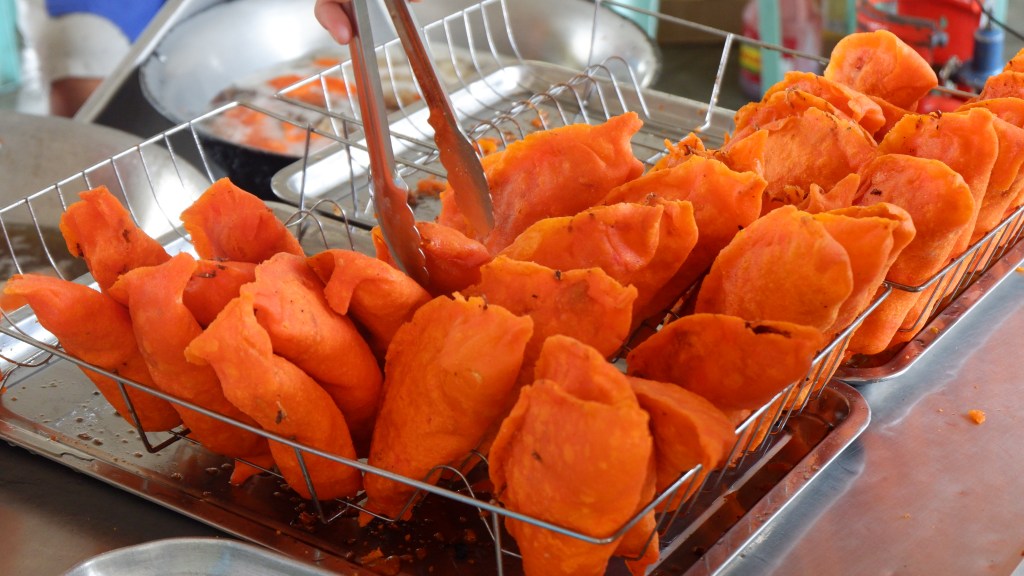
Featured photo: Lokalpedia / Wikimedia Commons, used under CC BY-SA 4.0.
Why Ilocos empanada is worth traveling for
The Ilocano version is different from the baked, wheat-based turnovers found in many countries. Its wrapper is commonly made from rice flour, shaped thinly by hand, filled, folded, and deep-fried to order. Green papaya or cabbage brings freshness and texture. Mung beans may add body. Ilocano longganisa supplies garlic, salt, and meatiness, while an egg turns the snack into a filling meal.
The best part is often the contrast. The shell is crisp, the vegetables stay tender, and the yolk can remain soft depending on the cook and the order. Sukang Iloko, the region’s sugarcane vinegar, adds acidity and may be seasoned with chili, onion, garlic, or salt.
The history of Ilocos empanada
The word empanada comes from the Spanish verb empanar, meaning to wrap or coat in bread. Philippine News Agency reporting describes the pastry as a Spanish introduction that Ilocano cooks reshaped with ingredients available in the region. Rice flour replaced a conventional wheat crust. Green papaya, mung beans, egg, and local sausage turned the imported form into something distinctly Ilocano.
Stories also connect the dish to Spanish and Mexican movement through the colonial Philippines, but the precise route and first maker are not firmly documented. It is safer to treat those accounts as origin traditions rather than settled history. What can be established is that generations of Ilocano families made the empanada their own, sold it in markets and at fiestas, and passed techniques through households.
Batac made the food part of its public identity. The city promotes its orange empanada as a local specialty, while the Batac Riverside Empanadaan brings multiple cooks together in one dining area. In Vigan, empanada stalls sit naturally within the city’s plaza and market culture.
The result is not one fixed recipe, but a regional family of recipes.
Ilocos Norte versus Ilocos Sur empanada
Travelers often reduce the comparison to orange Batac versus pale Vigan, but real recipes are more varied. Use this table as a practical guide, not an absolute rule.
| Feature | Batac and Ilocos Norte style | Vigan and Ilocos Sur style |
|---|---|---|
| Wrapper color | Usually bright orange from achiote or annatto | Often pale or lightly golden, though orange versions also appear |
| Texture | Crisp, sometimes slightly thicker and more substantial | Often thinner, delicate, and very crisp |
| Typical filling | Green papaya, mung beans, Ilocos Norte longganisa, and egg | Green papaya or other vegetables, Vigan longganisa, and egg |
| Sausage character | Garlicky local longganisa, with seasoning that varies by maker | Vigan longganisa, commonly known for a savory garlic and vinegar profile |
| Serving style | Fried to order and served with sukang Iloko | Fried to order and served with Ilocano vinegar |

Where to eat Ilocos empanada
Glory’s Empanada, Batac City
Glory’s Empanada is closely tied to the story of Gloria Aduana Cocson, who learned empanada making while young and developed the business while raising her family. Museo Ilocos Norte recognized her as a Gameng Lifetime Achievement Awardee in 2008. Philippine News Agency also identifies Glory’s as one of the best-known names at the Batac Riverside Empanadaan.
Location: Batac Riverside Empanadaan, Valdez Street, Barangay 1-S, Batac City, Ilocos Norte. Open a map search. Ask for the current menu, price, and hours before traveling, since reliable live business information was not available during this review.
Batac Riverside Empanadaan, Batac City
The Empanadaan is a destination rather than a single restaurant. Several cooks can prepare orange Batac-style empanadas in view of diners, which makes it useful for comparing wrappers, fillings, vinegar blends, and frying styles. The Ilocos Norte tourism office lists the site on Valdez Street in Barangay 1-S and describes it as a cluster of empanada stores.
Location: Valdez Street, Barangay 1-S, Batac City. Open a map search. Go with enough appetite to share more than one version, and choose a stall that fries each order while you wait.
Irene’s Vigan Empanada, Vigan City
Irene Santos established Irene’s Vigan Empanada on Calle Salcedo in 2004, continuing a family recipe that Philippine Primer traces to the 1930s. Its documented specialties include empanadas filled with Vigan longganisa and egg, as well as variations using bagnet, sisig, beef, chicken, tuna, crab, and adobo flakes. Menus can change, so confirm a particular filling before visiting.
Location: 11 Calle Salcedo, Vigan City, Ilocos Sur, near Syquia Mansion. Open a map search. Philippine Primer listed daily hours of 9 a.m. to 8 p.m., but travelers should verify them directly because the listing is not a live schedule.
Plaza Burgos empanada stalls, Vigan City
Plaza Burgos is the easy street-food stop for travelers exploring Vigan Cathedral and the historic center. The stalls are known for empanada and okoy, a crisp shrimp fritter. Expect a casual setting, quick cooking, and variation from stall to stall rather than a standardized menu.
Location: Plaza Burgos, beside Vigan Cathedral, Vigan City. Open a map search. Availability can depend on the day, weather, and local events, so treat the plaza as a flexible stop.
Lanie’s Empanada, Laoag City
For a current Laoag option, Lanie’s Empanada expanded from a small kiosk to a larger space in the SM City Laoag food court in October 2026. Recent reporting identifies Melanie S. Torres as the manager and describes a family business serving empanada, miki, pinakbet, igado, bagnet, rice meals, and merienda.
Location: SM City Laoag food court, Laoag City, Ilocos Norte. Open a map search. Check the mall directory and current opening hours before going.
Bacarra vendor leads
A recent local small-business directory lists Manang Helen’s Empanada on Bacarra Road and Alicia’s Foodhouse in Barangay 11. Their current menus, hours, and exact map pins could not be independently confirmed. Consider them leads to verify with Bacarra tourism staff or the businesses, not guaranteed stops.
What to order
- Classic vegetable empanada: Rice-flour wrapper with green papaya or other vegetables. Ask whether the frying oil or preparation surface contacts meat if that matters to you.
- Longganisa empanada: Adds the local garlic sausage that gives each regional version much of its character.
- Special empanada with egg: Usually combines vegetables, longganisa, and a whole egg for a more substantial order.
- Vendor variations: Some shops offer double meat, double egg, bagnet, seafood, or other fillings. Order only what the vendor confirms is available that day.
Practical travel and food tips
- Eat it immediately. Steam softens the shell inside a takeaway bag. The texture is best a few minutes after frying.
- Watch it being cooked. Choose a busy stall that prepares each empanada to order and keeps raw ingredients covered.
- Ask before adding chili. The empanada itself is not always spicy, but the vinegar can be.
- Check allergy ingredients. Egg, pork, shellfish from shared fryers, and cross-contact may matter. Recipes differ.
- Carry small peso notes. Market and plaza stalls may not accept cards or foreign currency.
- Plan the route. Laoag and Batac are both in Ilocos Norte. Vigan is farther south in Ilocos Sur, so allow travel time rather than treating all three as one short food stop.
Frequently asked questions
What is Ilocos empanada made of?
A typical version uses a rice-flour wrapper filled with shredded green papaya or other vegetables, local longganisa, and egg. Batac versions may include mung beans. Every family and vendor can adjust the filling and seasoning.
Why is Batac empanada orange?
The wrapper is traditionally colored with achiote, also called annatto or atsuete. The Batac city government identifies the vivid orange color as one of the food’s recognizable features.
What is the difference between Batac and Vigan empanada?
Batac empanada is usually orange and may have a somewhat thicker shell with mung beans, vegetables, sausage, and egg. Vigan empanada is often paler and thinner, with Vigan longganisa as a defining filling. These are tendencies rather than rules.
Where can you find authentic Ilocos empanada?
Reliable starting points include Batac Riverside Empanadaan, Irene’s Vigan Empanada, the Plaza Burgos stalls in Vigan, and documented local makers in Laoag. Authenticity is not limited to one brand. Family-run market stalls are central to the tradition.
Is Ilocos empanada spicy?
Not necessarily. The filling can be mild, while the vinegar dip may contain chili. Ask for plain vinegar if you prefer less heat.
What is sukang Iloko?
Sukang Iloko is an Ilocano sugarcane vinegar with a strong, pleasantly sour flavor. Vendors may season it with chili, garlic, onion, pepper, or salt. It balances the richness of the fried wrapper, sausage, and egg.
Explore more Filipino food
Continue through northern Luzon with the Pixel Passports guide to Vigan’s heritage streets and Ilocano food. For a wider look at small makers and market cooking, read the introduction to hidden food spots in the Philippines. Travelers building a longer driving route can also use the Philippines RoRo road-trip guide.
Ilocos empanada is most rewarding when treated as living food culture, not a checklist item. Compare versions, ask cooks about their fillings, pay the stated price, and give family businesses the time and respect their work deserves.
Research and practical sources
- City Government of Batac
- Museo Ilocos Norte: Empanada
- Museo Ilocos Norte: Gloria Aduana Cocson
- Ilocos Norte Tourism: Batac Empanadaan and provincial travel information
- Philippine Primer: Irene’s Vigan Empanada, updated February 15, 2024
- Daily Tribune: Lanie’s Empanada expansion at SM City Laoag, October 19, 2026


Leave a Reply