
In Romblon, a small parcel folded from coconut leaves can hold an entire food story. Inside is sarsa na uyang, a savory mixture built around freshwater shrimp and coconut, with aromatics and heat worked in by hand. It is not the sort of dish that always appears on a printed menu. Its place is closer to the home kitchen, the market basket, and the family table.
That makes sarsa na uyang easy to miss, even for travelers who arrive in Romblon ready to eat. It also makes the dish worth understanding. The methods recorded in Romblon differ from household to household, but the common thread is clear: local ingredients, leaf wrapping, patient cooking, and knowledge passed through families.
What is sarsa na uyang?
Sarsa na uyang is a traditional Romblon preparation made with small freshwater shrimp, grated or shredded coconut, chili, and seasonings. A 2024 microbiology study by researchers from the University of the Philippines describes the dish with those core ingredients and notes that it is traditionally wrapped in coconut leaves. The study offers useful independent confirmation of the dish’s basic form, although it is not a recipe guide.
The word uyang refers to the small shrimp at the center of the dish. Once the ingredients have been pounded or ground together, the mixture is portioned into leaf packets. Cooking methods vary. Some documented versions are simmered in coconut milk, while another family preparation recorded on Romblon Island was cooked over fire. Those differences are part of the story, not a contradiction to smooth away.
A dish carried by family work
One of the clearest records comes from a February 2024 feature by GMA Public Affairs. It followed Milagrosa, a cook in Agnipa, Romblon, who said she had been preparing and selling sarsa since 1998. The work began as a way to help meet her family’s daily needs. In the feature, she grated coconut, prepared ginger, onion, garlic, chili, and salt, pounded the mixture, wrapped portions in coconut leaves, and cooked the parcels in coconut milk.
The next morning, she brought the finished packets into town to sell. The income helped with food, household expenses, and her children’s needs. That account matters because it places the dish where it actually lives. Sarsa na uyang is food heritage, but it is also labor, livelihood, and practical care.
A separate account published by Silversea in 2025 documented a family preparation on Romblon Island. Relatives shared the work of cleaning freshwater shrimp, preparing coconut and spices, grinding the mixture, wrapping portions, and tending the fire. The details were not identical to Milagrosa’s method, yet the family structure around the cooking was strikingly similar. Sarsa survives because people continue to know how to make it together.
How the preparation changes from one kitchen to another
There is no single recipe in the available reporting that can stand for every Romblon household. A version documented in San Agustin uses freshwater shrimp, shredded young coconut, garlic, chili, salt, and water. The ingredients are pounded in a wooden mortar, wrapped in coconut leaves, and boiled in coconut milk.
Other accounts add ginger, shallots or onion, and peppercorns. Some reports describe coconut or banana leaves. Older food writing from Romblon also mentions versions made with prawns or kuray, a local land crab, where those ingredients are available. These are documented variations, not permission to label any shrimp-and-coconut parcel as sarsa na uyang.
- Shrimp: commonly described as small freshwater shrimp or river prawns.
- Coconut: grated or shredded coconut forms much of the filling, and coconut milk may also be used for cooking.
- Aromatics: garlic, ginger, onion or shallot, chili, salt, and sometimes peppercorns appear across different accounts.
- Wrapping: coconut leaves are the most consistently documented wrapper.
- Cooking: simmering in coconut milk and cooking over fire have both been recorded.
For a visitor, the useful lesson is simple: ask how that particular batch was made. The answer may tell you which family, barangay, or set of ingredients shaped it.
What did sarsa na uyang cost?
In the GMA feature recorded in February 2024, Milagrosa sold each parcel for ₱10 (about $0.16). This is a historical price from that report, not a current 2026 market quote and not a province-wide standard.
| Documented item | Philippine price | Approximate U.S. dollar value | Price date |
|---|---|---|---|
| One sarsa na uyang parcel in the GMA feature | ₱10 | $0.16 | February 2024, historical |
The conversion uses the Bangko Sentral ng Pilipinas reference rate of ₱63.852 per $1 for October 30, 2026, checked on November 2, 2026. Dollar conversions are approximate. Market prices and exchange rates change, so confirm the current price before buying.
Where travelers can look for it
No restaurant could be independently verified as a dependable current seller during research for this article. That is important to say plainly. Sarsa na uyang has been documented as home-cooked food and as something carried into town or sold around markets and streets. Availability may depend on the day, the season, and which cooks have made a batch.
Romblon Public Market and the surrounding poblacion are sensible places to begin asking, especially earlier in the day. A market vendor, accommodation host, tourism worker, or tricycle driver may know who is currently making it. Ask for sarsa na uyang by name and confirm that the parcel contains freshwater shrimp. Do not assume that a similar leaf-wrapped food is the same dish.
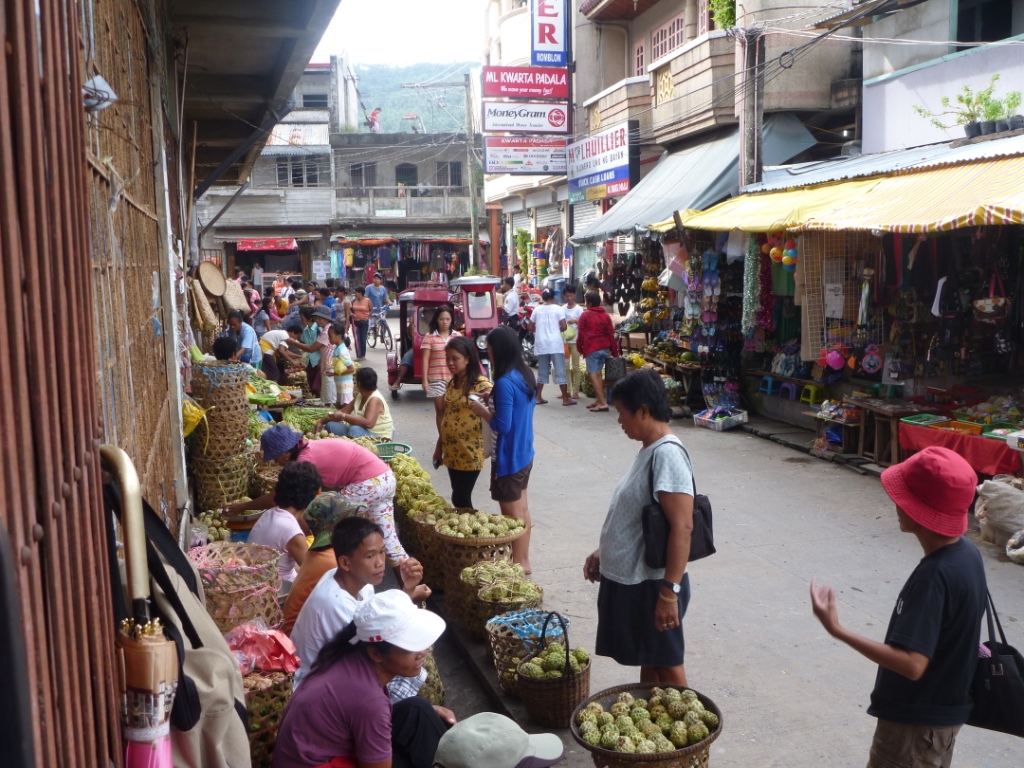
If you find a seller, ask before photographing the person, the stall, or the preparation. Buy directly when possible, accept that a batch may sell out, and avoid pressing a family for a private recipe. Interest is welcome when it supports the cook and respects the boundaries around the food.
Planning a food stop in Romblon
Romblon is an island province, so a food search needs some flexibility. Romblon Island is commonly reached by sea, while Tugdan Airport is on Tablas Island and requires onward land and sea connections for travelers continuing to Romblon town. Ferry routes and schedules can change with operators and weather. Check them close to departure and leave room for delays.
- Carry cash in smaller denominations for market purchases.
- Ask early in your stay instead of saving the search for departure day.
- Confirm ingredients if you have shellfish, coconut, or chili sensitivities.
- Keep leaf-wrapped food out of prolonged heat and ask the seller how soon it should be eaten.
- Pair a Romblon food trip with broader planning for inter-island transport. Pixel Passport’s Philippines RoRo and island-hopping guide explains the kind of schedule buffer island travel often requires.
Readers exploring more regional food traditions can also continue with the Samar food guide and the comparison of Batac and Vigan empanadas. Together, these stories show why “Filipino food” is never one fixed menu.
Why sarsa na uyang deserves careful attention
Calling a dish “heritage” can make it sound frozen in the past. Sarsa na uyang is more interesting than that. Its continuity depends on present-day choices: gathering the ingredients, teaching the next pair of hands, making time for labor-intensive preparation, and finding buyers who value the result.
Romblon’s provincial tourism office has recently discussed slow food tourism as an experience that can connect visitors with sourcing, cooking, and tasting. Sarsa na uyang fits that conversation, but it should not be turned into a performance on demand. The strongest food encounters begin with listening, permission, and fair support for the people doing the work.
Taken together, the documented preparations suggest why sarsa na uyang can be difficult to standardize or scale. The shrimp must be cleaned, the coconut prepared, the seasonings worked into the mixture, and each portion wrapped before cooking. That sequence rewards practiced hands and shared labor. It also means availability can be uneven. A small batch sold by one cook may be a better reflection of the tradition than a version redesigned for constant restaurant service.
Frequently asked questions
Is sarsa na uyang a sauce?
Not in the way many English speakers use the word “sauce.” The documented dish is a seasoned shrimp-and-coconut mixture formed into portions, wrapped in leaves, and cooked.
Is there one official recipe?
No single official recipe was found. Freshwater shrimp and coconut are consistent, but the aromatics, wrapper, and cooking method vary across documented family and community preparations.
Can travelers order it at a restaurant?
Possibly, but no restaurant was verified as a reliable current seller for this draft. Asking at Romblon Public Market, around the poblacion, or through a local host may be more productive. Availability is not guaranteed.
Is the reported price current?
No. The documented ₱10 ($0.16) price came from a February 2024 television feature. It is included as a historical reference only.
Research notes and sources
- GMA Public Affairs, Dapat Alam Mo!, February 13, 2024, for Milagrosa’s preparation, livelihood account, and historical selling price.
- Silversea, “Philippines Traditional Cuisine,” July 16, 2025, for a documented Romblon family preparation and a fire-cooked variation.
- Out of Town Blog, “Sarsa of Romblon”, for a documented San Agustin recipe variation.
- Riva, Manding, Pagoso, and Vital, “Wrapped in Tradition, Unwrapped in Science,” 2024, for independent academic description of the dish’s core ingredients and leaf wrapping.
- Philippine Information Agency, Romblon slow food tourism report, for the province’s recent culinary-tourism context.
- Bangko Sentral ng Pilipinas exchange-rate data, for the October 30, 2026 conversion rate.
Disclosure: This independently researched article is not sponsored. Pixel Passport received no payment, free meal, discount, travel benefit, or other material benefit from any person or business mentioned here.


Comments
One response to “Sarsa na Uyang: Romblon’s Traditional Shrimp Dish and the Families Keeping It Alive”
[…] and cooking traditions from across Mindanao. For a deeper regional food story, Pixel Passport’s sarsa na uyang feature explains how another Philippine community keeps a local dish connected to family […]
LikeLike